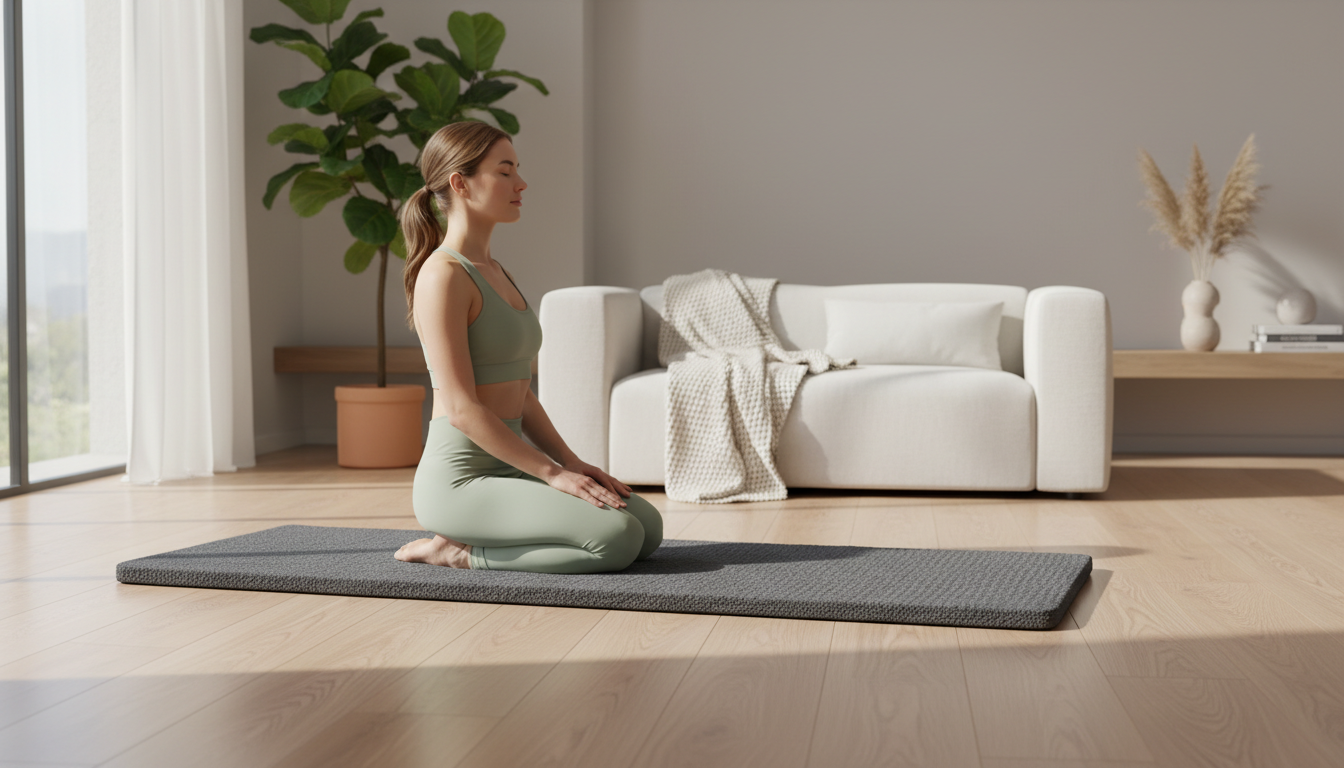
Find Your Flow: The Best Yoga Mat for Your Practice
By the BetteReview editorial team · July 15, 2026
As an Amazon Associate, BetteReview earns from qualifying purchases. This doesn't change the price you pay.

Why Choosing the Right Yoga Mats
Many individuals embark on a yoga journey with enthusiasm, only to find their practice hindered by an inadequate mat. The frustration of hands or feet slipping during crucial poses, the discomfort of knees pressing directly onto a hard floor, or the annoyance of a mat that stubbornly refuses to lie flat can detract significantly from the meditative and physical benefits of yoga. A yoga mat is not merely a piece of equipment; it's a personal space, a foundation that enables stability, comfort, and focus. Without the right mat, practitioners may find themselves constantly adjusting, losing concentration, and even risking minor injuries due to lack of grip or support.
The quest for the best yoga mat often begins after experiencing these common pitfalls. It’s about more than just aesthetics; it’s about understanding how different materials, thicknesses, and textures interact with your body and your practice style. Investing in a suitable mat can dramatically improve your experience, allowing you to hold poses longer, transition more smoothly, and fully immerse yourself in the present moment, rather than battling with your equipment. This guide aims to demystify the selection process, helping you identify the characteristics that will truly elevate your yoga practice.
What to Look For
When evaluating yoga mats, several critical factors consistently emerge from product specifications and user feedback as being paramount. The first is **Grip and Traction**. A mat's ability to prevent slipping, especially when hands and feet become sweaty, is non-negotiable for safety and stability. Materials like natural rubber, polyurethane, and certain PVC formulations are often cited for their superior non-slip properties. Look for mats that explicitly mention "wet grip" or "anti-slip" features in their descriptions, and consider user reviews that specifically address performance during hot yoga or intense sessions.
Secondly, **Cushioning and Support** are essential for protecting joints and providing comfort, particularly during seated poses or those where knees or elbows are in direct contact with the mat. Mats typically range in thickness from 1mm (travel mats) to 6mm or more. While thicker mats offer more cushioning, they can sometimes compromise stability for balancing poses. A common recommendation for general practice is a mat between 4mm and 5mm, offering a good balance. Material density also plays a role; a dense foam or rubber will provide more support than a softer, less dense material of the same thickness. Finally, **Durability and Material Quality** are crucial for longevity. Mats made from high-quality, eco-friendly materials such as natural rubber, TPE (Thermoplastic Elastomer), or even jute, tend to hold up better over time against wear and tear, reducing the need for frequent replacement. Consideration for ease of cleaning and portability (weight) should also factor into your decision, depending on how and where you plan to use your mat.
The Results: Top Yoga Mats Worth Considering
Based on a comprehensive review of product specifications and recurring verified-buyer feedback, several types of yoga mats consistently stand out for their performance and suitability for different practitioners. For those prioritizing **superior grip and stability**, natural rubber mats with a polyurethane top layer are frequently highlighted. These mats are often praised for their exceptional non-slip properties, even in humid conditions or during challenging flows, allowing practitioners to maintain poses with confidence. While they can be heavier and sometimes have a distinct initial scent, their performance for advanced and regular practitioners is often considered unparalleled. Search for "natural rubber yoga mat" to explore these options: Check on Amazon
For individuals seeking a balance of **comfort, durability, and eco-friendliness**, mats made from high-density TPE or eco-friendly PVC alternatives are often recommended. These mats typically offer good cushioning without being excessively thick, making them versatile for various yoga styles. User feedback often points to their lighter weight compared to rubber mats, making them more portable for studio classes or travel. They are also generally easier to clean and maintain, appealing to those looking for a practical, long-lasting option that aligns with environmental values. Look for mats described as "eco-friendly TPE yoga mat" for these characteristics.
Finally, for practitioners who require **extra cushioning or are sensitive to hard surfaces**, thicker mats (6mm+) made from high-density foam or specific PVC formulations receive positive remarks. These mats are particularly beneficial for restorative yoga, Pilates, or individuals with joint sensitivities, providing a softer landing and more comfortable support during floor-based exercises. While they might be less ideal for dynamic, balancing poses due to their increased squishiness, their comfort aspect is highly valued for specific practices. To find these options, consider searching for "extra thick yoga mat" or "cushioned yoga mat."
As an Amazon Associate, we earn from qualifying purchases made through the links on our site.
Common Buying Mistakes
One of the most common buying mistakes is **prioritizing price over performance**. While budget-friendly mats are appealing, they often compromise on grip, durability, and cushioning, leading to a frustrating and potentially unsafe practice. Many buyers regret purchasing a thin, slippery mat that quickly wears out, ultimately costing them more in the long run when they have to replace it. Another frequent error is **ignoring mat thickness relative to practice style**. A very thin mat might be great for portability but offers insufficient cushioning for sensitive joints, while an overly thick, soft mat can hinder stability in balancing poses. Understanding your primary yoga style and physical needs is crucial before selecting a thickness.
A third mistake is **overlooking material composition and its impact on grip and eco-friendliness**. Some synthetic materials can have a strong chemical smell or be less grippy when wet, which is a significant drawback for many practitioners. Furthermore, choosing materials without considering their environmental impact is a growing concern for many. Always check the material specifications and read user reviews regarding smell and wet grip performance to avoid these common pitfalls. Your mat is an investment in your practice, so choose wisely.
Final Verdict
Selecting the best yoga mat ultimately depends on your individual practice style, preferences for grip and cushioning, and environmental considerations. For an all-around excellent performer that balances superior grip with sufficient cushioning for most practices, we recommend exploring high-quality natural rubber or polyurethane-coated mats. Their consistent performance in various conditions makes them a reliable choice for dedicated practitioners. Ready to find your perfect mat? Start your search for top-rated yoga mats here: Check on Amazon